Quick answer:
- Brake and fuel lines are the dangerous corrosion, not the cosmetic rust you can see.
- Rusted exhaust and rotted subframes are common PA inspection failures here.
- Washing the undercarriage in winter genuinely helps — the mistake is only doing it in spring.
The Corrosion That Actually Matters
Surface rust on a rocker panel is ugly. It is not what should worry you.
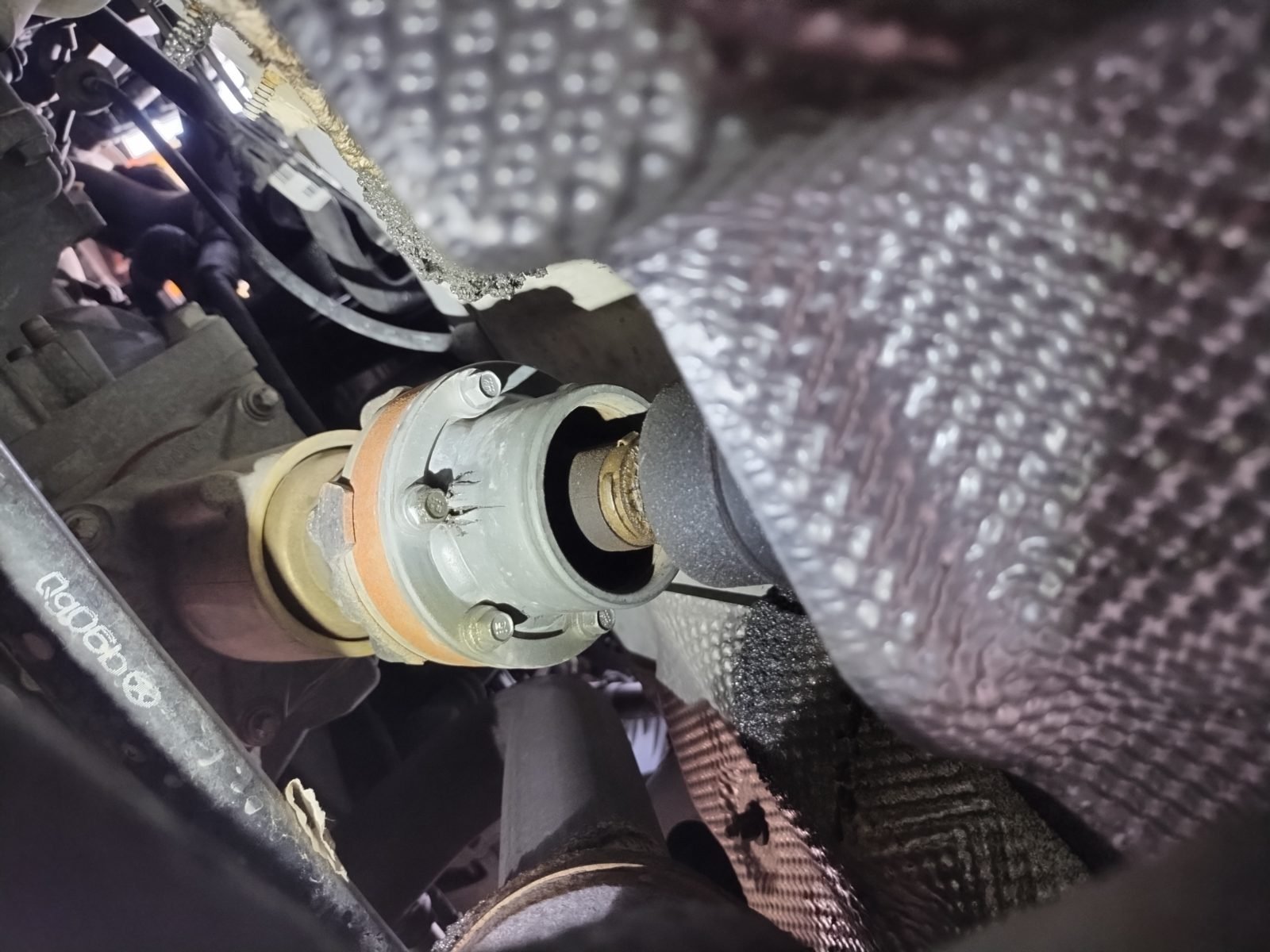
Salt gets thrown up into the underside of the car, packs into seams and around brackets, and stays damp for months. What it attacks are steel components that were never meant to sit in brine: brake lines, fuel lines, exhaust components, subframes, suspension mounting points, and every electrical ground connection under there.
A brake line is the one that keeps mechanics up at night. It corrodes from the outside, thins gradually, and gives no warning until it bursts — typically the moment you press the pedal hard, which is the exact moment you needed it.
Why This Fails PA Inspections
Pennsylvania inspects the things salt attacks, which is not a coincidence in a state that salts this heavily:
- Brake lines and hoses — corrosion here is an automatic failure and a genuine safety issue.
- Exhaust system — rusted-through pipes, rotted hangers, and leaking joints.
- Structural and frame rust — perforation in load-bearing areas fails, and is often uneconomical to repair.
- Suspension mounting points — rusted strut towers and control arm mounts.
- Fuel lines — same failure mode as brake lines, different consequence.
What Actually Helps
Most salt advice is either useless or actively wrong. These are the things that make a measurable difference:
- Wash the undercarriage during winter, not just after it. This is the big one. Salt does its damage while it is sitting on the car in January, so a wash after every few storms beats one triumphant spring cleaning.
- Pick a wash with an actual undercarriage spray. Rinsing the paint accomplishes nothing for the parts that matter.
- Wash on a day above freezing so water drains rather than freezing in seams and locks.
- Keep drain holes clear — rocker panels and door bottoms have them, and blocked ones hold brine against bare metal.
- Have the underside inspected annually, ideally before your inspection rather than at it.
- Consider an oil-based undercoating if you are keeping the car long-term. Hard sealants can trap moisture; the annual oil-type treatments creep into seams instead.
When Rust Decides the Car
There is a point where corrosion stops being a repair question and becomes a keep-or-replace question, and it is worth recognising honestly.
Brake lines can be replaced — it is real work but entirely doable. Exhaust sections can be replaced. But once structural rust is into the frame, subframe mounts, or strut towers, you are into repairs that frequently cost more than the vehicle is worth, and that may not be safely repairable at all.
This is why the annual under-car look matters so much in this region. Caught early, salt damage is a line item. Ignored for three winters, it is the end of the car.
Not sure what is going on underneath? Call (412) 332-9926. We inspect brake and fuel lines, exhaust, and suspension mounts at your home — and tell you honestly whether you are looking at maintenance or a decision.
We are not a state inspection station. This service does not perform the official PA safety or emissions inspection — that must be done by a PennDOT-certified mechanic at a licensed station. What we do is diagnose and repair what makes cars fail, so you pass when you go.
Frequently Asked Questions
Does washing my car in winter actually help?
Yes, and the timing is the part people get wrong. Salt does its damage while it sits on the car through winter, so washing every few storms — with an undercarriage spray, on a day above freezing — beats a single spring wash.
What is the most dangerous salt damage?
Corroded brake lines. They thin from the outside with no warning and can burst under hard braking. Fuel lines fail the same way with different consequences. Both are inspection failures and both are safety issues.
Is undercoating worth it?
For a car you plan to keep several years in this climate, often yes. Oil-based treatments that creep into seams are generally preferred over hard sealants, which can trap moisture against metal if they crack.
Can rust fail my PA inspection?
Absolutely. Corroded brake lines, rotted exhaust, rusted suspension mounts, and structural perforation are all failure items, and they are among the most common serious findings in this region.
Can you inspect the underside at my house?
Yes. Brake and fuel line condition, exhaust, and suspension mount inspection are all straightforward on-site work, and far better done before your inspection than at it.
Need a mobile mechanic in Pittsburgh? Call Pittsburgh Auto Repair Pros at (412) 332-9926 for fast, local, upfront-priced on-site service — or request service online. We come to you across the Pittsburgh metro.