Quick answer:
- Overheating is a stopped-traffic problem, not a highway one.
- Road salt corrodes cooling components from the outside in.
- A sealed system should never need topping off. If it does, find the leak.
Why Stopped Traffic Is the Real Test
At road speed, air is forced through your radiator whether or not anything is working correctly. That masks a wide range of developing faults.
Sitting still, the only thing moving air is the cooling fan. So a fan that has quietly stopped working, a radiator packed with debris, a slightly low coolant level, or a water pump moving less than it should — none of which you would notice on I-79 — all surface at once in a stationary queue on a hot afternoon.
In Pittsburgh that means the tunnels and the bridges. The Squirrel Hill Tunnel backup and the Fort Pitt approach are exactly where a marginal cooling system gets found out, and they are also the worst possible places to discover it.
The Salt Angle Nobody Mentions
Cooling systems here have a second enemy that warm-climate cars never face.
Winter road spray throws salt brine into the front of the car, where it sits in the radiator and condenser fins and against the cooling system’s metal components. Over several winters that accelerates corrosion of the radiator itself, the fittings, and the clamps — and it slowly blocks airflow through the fins with a crust of salt and road grime.
So a Pittsburgh car has a cooling system that is both more likely to leak and less able to shed heat than the mileage alone would suggest. Rinsing the front of the car properly at the end of winter genuinely matters here, and it is the step most people skip.
The Spring Checklist
None of this is complicated, and all of it is cheaper than an overheat:
- Check the coolant level when the engine is completely cold, at the overflow reservoir.
- Confirm the cooling fan actually runs. Let it idle until warm with the A/C on — the fan should cut in audibly.
- Squeeze the radiator hoses when cold. Rock-hard, mushy, or crunchy all mean replacement.
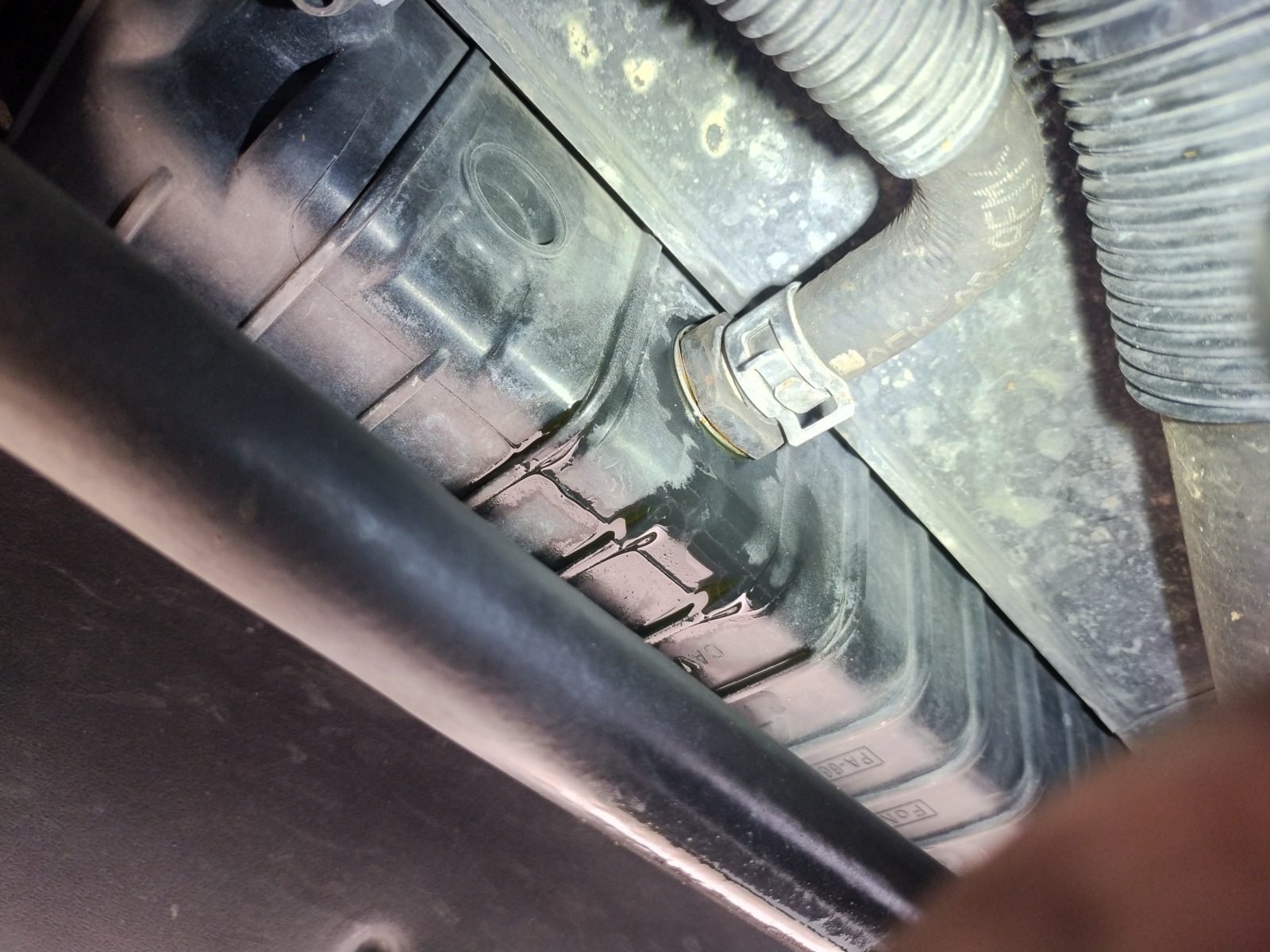
- Look for crusty residue around hose clamps and the radiator — dried coolant marks a slow leak.
- Rinse the radiator and condenser gently with plain water after winter, from the engine side outward. Low pressure only — a pressure washer flattens the fins permanently.
- Check the radiator cap. A cheap part that holds system pressure, and a failed one causes overheating by itself.
Do Not Ignore a Slow Leak
A sealed cooling system should not consume coolant. If you are topping it up every few weeks, it is going somewhere — onto the ground or into the engine.
Slow leaks are also the cheapest stage to fix: a hose, a clamp, a cap, a thermostat housing. Left through a summer of tunnel traffic, that same leak eventually drops the level far enough to overheat the engine, and an overheat can mean a warped head or a failed gasket. That is the difference between a modest bill and a very large one.
Topping off coolant, or running warmer than usual? Call (412) 332-9926. We pressure-test the system at your home or office and find where the coolant is actually going.
Frequently Asked Questions
Why does my car only run hot in traffic?
Airflow. At speed air is forced through the radiator regardless; stopped, only the cooling fan moves it. Overheating exclusively in stopped traffic points strongly at a failing fan, a blocked radiator, or a marginal water pump.
Does road salt affect the cooling system?
Yes, more than people realise. Winter spray corrodes radiator fittings and clamps and crusts the fins with salt and grime, so the system both leaks more readily and sheds heat less effectively over time.
How often should coolant be changed?
Follow your manufacturer's interval — it varies widely by coolant type. What matters more day to day is that the level stays constant. A system needing regular topping off has a leak.
Can I use water instead of coolant?
In a genuine emergency, to get somewhere safe. But water alone boils sooner, offers no corrosion protection, and no freeze protection — which matters a great deal in a Pittsburgh winter. Have the proper mixture restored promptly.
Can you pressure-test the system at my house?
Yes. Pressure testing, leak location, thermostat and fan checks, and most hose and cap replacements are all straightforward on-site work.
Need a mobile mechanic in Pittsburgh? Call Pittsburgh Auto Repair Pros at (412) 332-9926 for fast, local, upfront-priced on-site service — or request service online. We come to you across the Pittsburgh metro.